


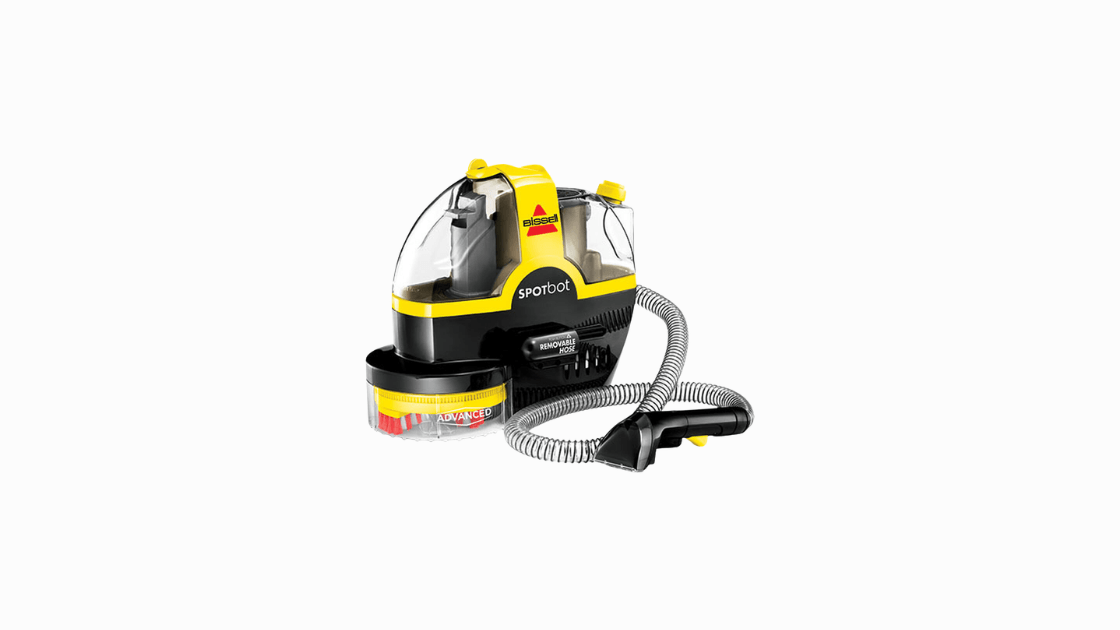
If you’ve recently tried to buy a Bissell SpotBot — or order a replacement for your existing one — you may have hit a wall. Product pages disappear, shelves are empty, and search results give you conflicting answers. Is it discontinued? Is it just out of stock? And if it’s gone for good, what do you do next?
This article walks through what’s actually happening with the SpotBot, why Bissell likely retired it, what your options are as a current owner, and which alternatives come closest to replacing it.
Is the Bissell SpotBot Actually Discontinued?
The short answer: it depends on the specific model, and the situation is more gradual than a clean cutoff.
Some SpotBot SKUs have been removed from Bissell’s main website. Others still appear on retailer pages — Lowe’s, for example, still shows an active SpotBot Pet product page with customer reviews at the time of writing. That tells you this is a phased retirement, not a single global shutdown date.
Here’s what phased discontinuation usually looks like in practice:
- Individual model numbers exit production at different times.
- Leftover inventory stays on retailer shelves or third-party marketplaces even after manufacturing stops.
- A product listed by a third-party seller does not mean it’s still being made.
Before assuming all SpotBot versions are gone, check whether your specific model number is still listed directly on Bissell’s website. If it’s only showing up through marketplace sellers, production has likely stopped for that version — you’re just seeing old stock.
What the SpotBot Was Built to Do
The SpotBot was a compact, portable spot cleaner with one standout feature: it worked automatically. You placed it directly over a stain, pressed a button, and walked away.
It offered two cycle options — a 3-minute surface clean and a 6-minute deep clean. During the cycle, the unit dispensed cleaning solution, ran rotating brushes over the stain, and suctioned everything back up. No wand, no scrubbing, no hovering over it.
That “set it and forget it” design is what built its loyal following, especially among pet owners. If your dog had an accident on the carpet, you could drop the SpotBot on the spot, go make coffee, and come back to a clean patch. That convenience was the whole value proposition.
It handled pet urine, food spills, and ground-in stains on both carpet and upholstery. For households with frequent pet messes, it became a go-to tool rather than an occasional-use appliance.
The Most Likely Reasons Bissell Retired It
Bissell has not published an official press release naming a single cause. What follows are the most likely explanations, based on how appliance brands typically manage product lifecycles.
1. Normal Product Lifecycle Management
Appliance brands retire older models regularly. It’s not unusual — it’s standard practice. The SpotBot went through multiple generations before reaching the end of the line. At some point, the cost of maintaining and updating an aging product line outweighs the benefit.
2. Component Obsolescence
As a product ages, sourcing the specific internal parts becomes harder and more expensive. Suppliers stop producing certain components. When that happens, continuing to manufacture or repair the unit stops being practical — even if demand still exists.
3. Shifting Consumer Preferences
Consumer demand has moved toward manual portable extractors — tools like the Bissell Little Green, which use a hose and cleaning tool rather than a parked automatic head. These offer more flexibility across different surfaces and stain types. For many buyers, that flexibility matters more than full automation.
4. Cost Efficiency of Shared-Platform Machines
Products like the Little Green family share components across multiple SKUs. That shared platform makes them cheaper to produce, easier to repair, and simpler to support. A specialized automated unit like the SpotBot is harder to justify on the production line when a simpler machine can cover the same core need.
There is no evidence of a safety recall or legal issue behind the SpotBot’s retirement. This appears to be a straightforward business decision, not a response to defects or danger.
What Current SpotBot Owners Should Do About Parts and Repairs
If you already own a SpotBot and it’s still running, here’s how to approach keeping it operational.
Cleaning Solutions: Not a Problem
The cleaning formulas used in the SpotBot are shared across many Bissell machines. You can still find Bissell pet stain formula, oxy formula, and similar products widely available. That part of the supply chain isn’t going away anytime soon.
Internal Parts: Act Sooner Rather Than Later
The mechanical components — pump, motor, brush assembly — are a different story. As the SpotBot ages out of production, official repair support from Bissell will shrink. If something breaks internally, your options are limited but not zero:
- Contact Bissell customer support directly. Ask specifically which internal parts are still stocked. Some components may still be available for a window of time after a product is discontinued.
- Search for a used donor machine. Buying a second SpotBot in working or partial condition from a marketplace seller, specifically to pull compatible parts, is a reasonable strategy for extending the life of your primary unit.
- Check third-party appliance parts suppliers. Some aftermarket suppliers carry components for discontinued machines. Quality varies, so research the supplier before buying.
The realistic ceiling here is a few more years of manageable repairs before parts become genuinely hard to find. Plan accordingly.
Should You Buy a SpotBot from a Third-Party Seller?
If you’ve found a “new” SpotBot listed on a marketplace site, here’s what to think through before buying.
First, confirm it’s actually new and not refurbished or returned stock relabeled. Marketplace listings are not always accurate. Second, understand that Bissell will not honor a warranty on a unit sold by an unauthorized seller. If something fails within weeks of purchase, you’re dealing with the third-party seller, not Bissell.
Third, weigh the long-term math. A discontinued unit bought today still has the same parts problem as one you’ve owned for years. You’re buying into a product with a shrinking support window.
That said, if the hands-free automated cycle is genuinely important to your routine and you find a unit in solid condition at a fair price, it’s not an unreasonable purchase — just go in with clear expectations.
The Best Current Alternatives to the SpotBot
No current machine perfectly replicates the SpotBot’s automatic parked cycle. But several options come close in terms of cleaning results.
Bissell Little Green
This is the most direct replacement in Bissell’s current lineup. It’s a manual portable extractor — you use a hose and cleaning tool to target stains. You don’t walk away while it runs, but you have far more control over where the cleaning happens. It’s versatile across carpet, upholstery, stairs, and car interiors. The tradeoff is effort for flexibility.
Bissell Little Green Pro
The Pro version adds more suction power and a larger tank. If you’re dealing with heavy pet messes regularly, the extra capacity is worth considering.
Bissell SpotClean Series
The SpotClean machines are another portable extractor option in Bissell’s current range. They work similarly to the Little Green with a hose-based setup and are widely available with active parts support.
How to Approximate SpotBot Results Manually
If you want to replicate the SpotBot’s thorough localized clean without any machine, this process works well for pet stains:
- Blot the stain immediately — don’t rub, just press and lift.
- Apply an enzyme-based cleaner or carpet-safe pre-treatment directly to the stain.
- Let it sit for the time listed on the product (usually 5–10 minutes).
- Use a portable extractor like the Little Green to pull the solution and stain residue out, or blot repeatedly with clean water and dry towels.
- Allow the area to dry fully before walking on it.
This takes more involvement than placing a SpotBot and walking away, but the cleaning outcome is comparable when you follow each step properly.
How to Tell If a Bissell Product Is Truly Discontinued
For the SpotBot and any future product you’re researching, here are reliable signals that a machine is out of production:
- The model number no longer appears on the manufacturer’s official website.
- Major retailers mark it “discontinued,” “no longer available,” or remove the page entirely.
- No new marketing, updated listings, or current-year reviews appear.
- Only third-party or marketplace sellers carry it, without Bissell branding or warranty support.
Remaining stock on shelves does not mean the product is still in production. It means a retailer bought inventory before the cutoff and is selling through what’s left. For more coverage on consumer product trends and practical buying guidance, Businesswards covers these topics in depth.
Final Thoughts
The Bissell SpotBot isn’t gone overnight — it’s quietly
Read Also:
