


Millions of Americans used Glass Wax in the 1950s and 1960s. They cleaned their windows with it. They used it to paint frosty Christmas scenes on their front windows with cardboard stencils. Then it quietly disappeared from store shelves. If you’ve ever wondered where it went, you’re not alone.
This article covers what Glass Wax actually was, how people used it, why it most likely disappeared, what happened to the company behind it, and whether you can still find anything like it today.
What Glass Wax Was and Who Made It
Glass Wax was a thick, pink liquid sold in metal cans. It was made by the Gold Seal Company of Bismarck, North Dakota. The company marketed it as a wartime chemical discovery, and it was first introduced locally in 1945 before spreading nationally through the 1950s.
It worked differently from modern glass cleaners. You didn’t spray it and wipe. Instead, you applied it like car wax — wipe it on, let it dry to a haze, then buff it off. That one step was supposed to clean and polish the glass at the same time.
Gold Seal also made other well-known household products, including Snowy Bleach and Mr. Bubbles bath foam. All of them were eventually discontinued. That detail matters when you start looking at why Glass Wax disappeared.
How People Actually Used Glass Wax
Everyday Window Cleaning
The basic use was straightforward. You’d put a small amount of Glass Wax on a cloth, spread it across a window or glass surface, wait for it to dry to a white haze, then buff it clear. The result was supposed to be streak-free and polished.
Compare that to using Windex: spray, wipe, done in seconds. Glass Wax took more time and effort. But for many people at the time, it was simply how you cleaned glass — especially large picture windows.
Christmas Window Stencils
This is the part that most people remember. During the holidays, families used Glass Wax to create frosty winter scenes on their front windows.
Here’s how it worked: you poured the pink wax into a shallow dish, held a cardboard stencil against the window, then dabbed the Glass Wax over it using a dry cellulose sponge. A coarser sponge gave the image a lacy, frosty look — like the kind of frost you’d actually see on a winter window. The result could be a Santa, a snowflake, a Christmas tree, whatever the stencil showed.
After the holidays, the Glass Wax wiped off cleanly. It left no permanent marks. For a lot of families in the 1950s and 1960s, doing the stencils was a seasonal ritual. Today, original Glass Wax cans and stencils are collected as vintage holiday memorabilia.
The Most Likely Reasons Glass Wax Was Discontinued
There’s no single official statement from Gold Seal explaining why Glass Wax ended. What we have is a combination of plausible factors that likely stacked on top of each other over time.
1. Flammability and Solvent Content
Glass Wax was a petroleum- and solvent-based product. At least one nostalgic source that covered the product’s history speculated that flammability may have contributed to its discontinuation. That’s not a confirmed fact — it’s speculation — but it’s a reasonable one.
Mid-century household products often contained chemicals that we’d handle very differently today. The flammability concern alone would have made the product harder to sell under modern standards without a significant formula change.
2. Regulatory Pressure Starting in the 1970s
From the 1970s onward, U.S. regulations tightened around flammability, volatile organic compounds (VOCs), and hazardous product labeling. Many older household formulas that had been on shelves for decades suddenly needed expensive reformulation to stay compliant.
Think of it like what happened with lead-based paints or heavy solvent varnishes. They weren’t necessarily banned outright overnight, but keeping them on the market became increasingly difficult and costly. Glass Wax was likely in a similar position.
This is a reasonable explanation based on how the industry changed during that period. It’s not a documented Glass Wax-specific fact, but it fits the timeline.
3. The Market Moved Toward Convenience
The cleaning products market changed significantly in the second half of the 20th century. Spray-and-wipe cleaners like Windex were faster, cheaper, and required no buffing step.
Glass Wax’s multi-step process — apply, wait for haze, buff off — started looking old-fashioned compared to a trigger-spray bottle. As consumers moved toward convenience, a product that required real physical effort had a harder time holding shelf space.
This wasn’t unique to Glass Wax. Many wax-based and polish-based cleaners went through the same slow decline during this period.
4. Corporate-Level Decisions at Gold Seal
Glass Wax wasn’t the only Gold Seal product that disappeared. Snowy Bleach and Mr. Bubbles were also discontinued. That pattern suggests something broader was happening at the company level — not just one product losing sales, but a larger shift in what Gold Seal could or wanted to support.
Public sources don’t give a detailed account of what happened to Gold Seal itself — whether it was sold, merged, or simply wound down. But the pattern of multiple product discontinuations points to business-level changes beyond any single product’s performance.
What Glass Wax Was Not — Clearing Up the Myths
A few things float around in online discussions about Glass Wax that are worth addressing directly.
It was not officially banned by the government. No accessible source documents a government order pulling Glass Wax from shelves. The more accurate picture is that it was discontinued, most likely because of a combination of regulatory pressure, reformulation costs, and market decline.
The flammability concern is speculation, not confirmed fact. It’s a reasonable guess backed by what we know about solvent-based products of that era. But no corporate record in available sources confirms that flammability was the direct or sole cause.
No one knows the exact date it disappeared. Nostalgic accounts from people writing in the 2010s and 2020s describe it as having been gone for roughly 40 years, which puts the discontinuation somewhere around the 1980s. That’s anecdotal, but it’s the clearest timeline available.
The honest answer is that multiple factors probably combined — and no single dramatic event ended Glass Wax. That’s actually how most older household products disappear. They don’t get banned. They just quietly become impractical.
What Happened to Gold Seal Company
Gold Seal was a regional manufacturer based in Bismarck, North Dakota. It produced several well-known mid-century household brands. But like many small regional manufacturers, it eventually faded from public view.
Reliable consumer-facing sources don’t provide a detailed timeline of what happened to Gold Seal — no confirmed merger date, acquisition, or bankruptcy record is readily available. What’s clear is that its major products, including Glass Wax, Snowy Bleach, and Mr. Bubbles, are all gone. The brand exists now mostly in memory, in vintage collections, and in nostalgic blog posts.
If you’re researching Glass Wax history for a specific purpose, Businesswards covers product histories and market shifts that are useful for understanding how mid-century brands rose and disappeared.
Can You Still Buy Anything Like Glass Wax Today?
You can’t buy the original Gold Seal Glass Wax. But there is a modern product that works in a similar way.
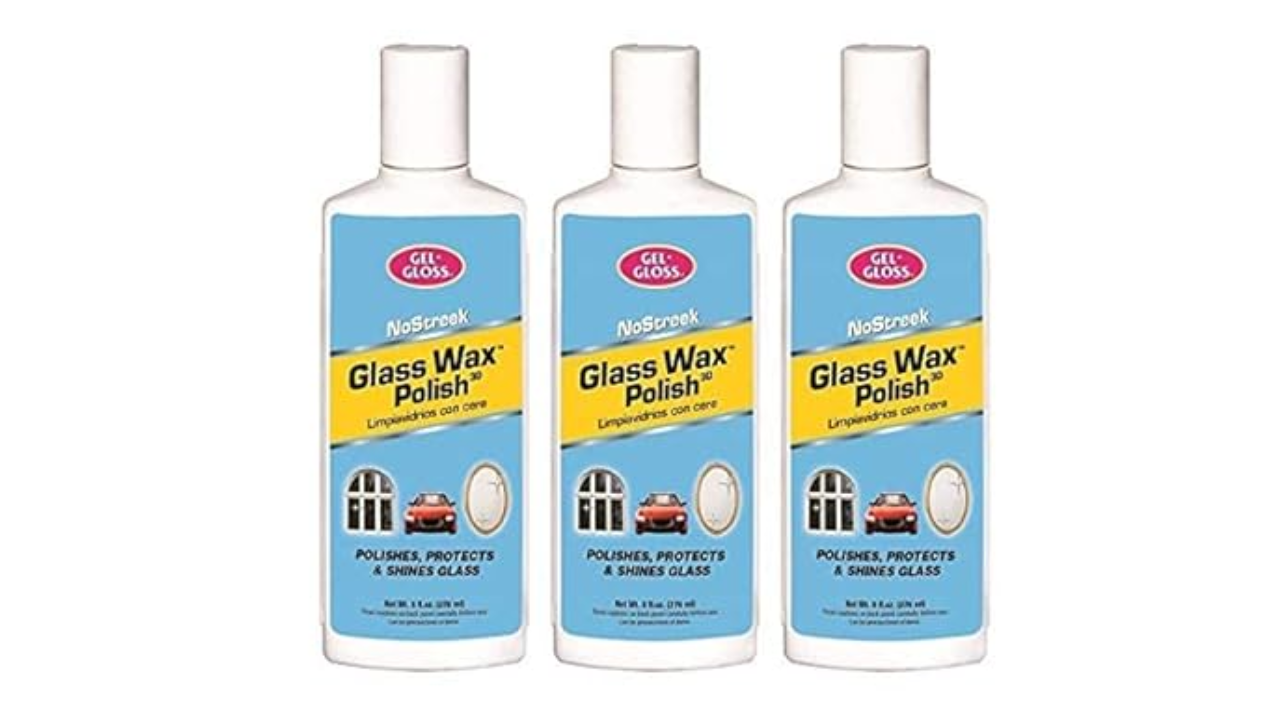
Gel-Gloss NoStreek Glass Wax Cleaner is currently sold at retailers including Ace Hardware. It’s a professional-grade glass polish that contains silicone. The application process is close to what Glass Wax required — apply to the surface, let it dry to a haze, then wipe off.
Some users who remember the original Glass Wax describe this as a successor product, though it’s almost certainly a different formula built to modern safety and environmental standards. It’s not the original pink wax in the metal can. But if you’re looking for something that cleans and polishes glass in one step, it’s the closest available option.
For the Christmas stencil tradition specifically, you’d need to source your own cardboard stencils — which are available from vintage shops and online marketplaces — and pair them with a wax-style product. It takes a little more effort to recreate than it used to, but it’s still doable.
Final Thoughts
Glass Wax disappeared the way most older household products do — not with a single dramatic event, but through a slow combination of changing regulations, shifting consumer habits, and corporate decisions that no longer made the product worth keeping on shelves.
What made it memorable wasn’t just its cleaning ability. It was the Christmas stencil tradition that tied it to a specific kind of family life in mid-century America. That’s why people still talk about it, collect the old cans, and search for what happened to it decades later.
The original is gone. But if you want the function — a glass product that polishes in one step — modern alternatives exist. And if you want the stencil tradition back, the only real barrier is finding the stencils.
Read Also
